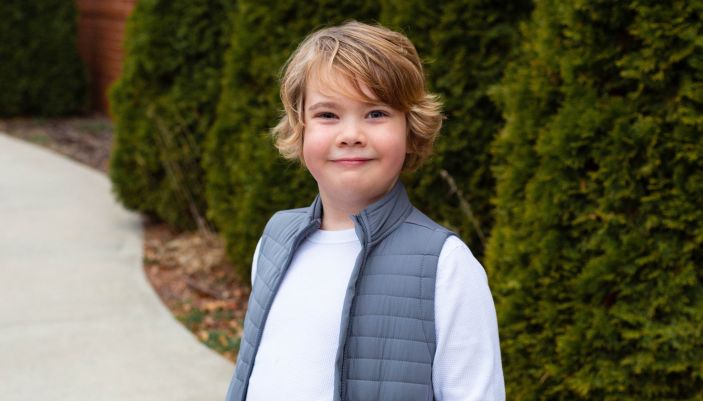

Jena Faue and Kim Turner witnessed a sudden change in their 4-year-old son from a happy, healthy child to a child consumed by severe tics and rage.
“He was gone. He was not the kid we knew,” Jena said.
Seger Turner’s behavior dramatically changes when he gets strep throat. The body attacks the brain which causes brain inflammation and symptoms. Symptoms are anxiety, rage, behavioral regression, tics, sleep disturbances, separation anxiety, obsessive compulsive disorder and intrusive thoughts.
The condition is called PANDAS—Pediatric Acute-onset Neuropsychiatric Disorders Associated with Streptococcal infections. It’s thought to be an autoimmune response to strep.
In September 2023, Seger awoke in the night with a fever and rash. Violent chills and head shaking followed. Tics became severe and his head began flopping and hammering, sometimes for 12 hours straight.
There were many specialists; tests that offered no answers; and lots of medical bills. “Finding someone who would listen is not something we thought would happen,” Jena said.
In January 2024, Seger was put on an antibiotic for an ear infection. In a day or two, he was better and his tics were gone. This was a big clue.

Now at age 6, Seger is on a path to better health thanks to his Mankato Clinic care team and his parents who never gave up researching and looking for answers.
Dr. Darla Wrage, Seger’s pediatrician at Mankato Clinic, had seen Seger at his best and worst.
“Seger’s diagnosis reinforces the age-old lesson taught in pediatrics – ‘listen to the parents.’ They know their child best, so their input is very valuable,” Dr. Wrage said. “Seger’s symptoms were quite dramatic and sudden. He also had an equally dramatic response to treatment.”
During flare-ups caused by strep, as well as influenza and COVID-19, Seger changed overnight. Head banging, snorting, throat clearing and gulping air lasted for hours. He punched himself in the face to stop his eyes from rolling. He had thoughts of hurting others, hurting himself, jumping in front of cars, drowning in the ocean. A math whiz, he could not subtract 1 from 2.
“On antibiotics, he has been the sweetest, kindest little soul. He showers us with kisses and love and will tell us how sorry he is for the things he’s said. His voice is back to what it was. He is Seger again. He is 100% Seger again, except he has all these tics lingering. And if they were minor, fine, but they are so much right now, I just need him to be OK,” Jena wrote in Seger’s health log.
“Dr. Wrage was very clear that PANDAS was not something she could treat but she wanted us to get to someone who could treat him. She always believed us. She got us everywhere we needed to go,” Jena said. “Without her, we would have never figured this out.”
Some tests and treatments for PANDAS are outside the scope of standard medicine.
“It was a journey,” Dr. Wrage said. “We follow up on the information provided by specialists and serve as the medical home for these patients. Pediatricians continue to provide routine health care to kids with complex health conditions.”
Solving the puzzle
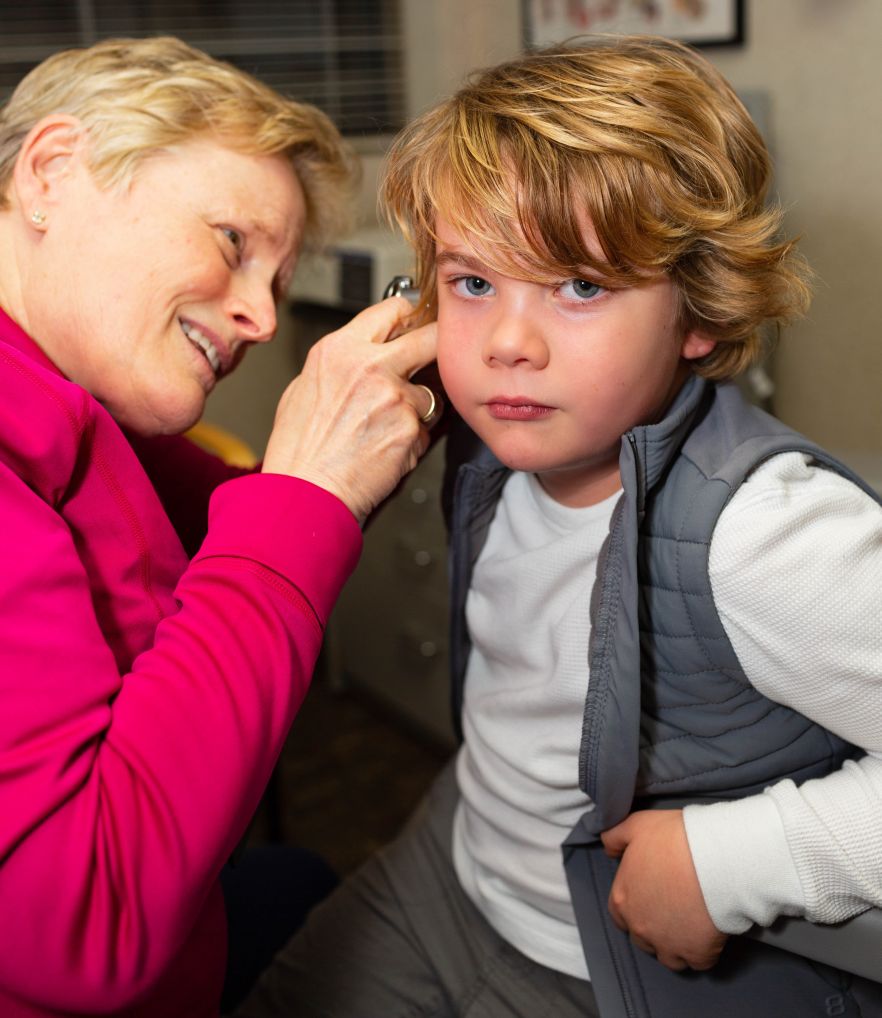
In September 2024, Dr. Wrage referred Seger to Dr. Susan Pearson, Pediatric Ear, Nose and Throat specialist, at Mankato Clinic. Jena believed her son, like many kids with PANDAS, could benefit from getting his tonsils and adenoids removed because they harbor strep and bacteria.
“Within two weeks of surgery, he was doing great,” Jena said. “Dr. Pearson is our whole world. She saved his life. She has given us our quality of life back.”
Dr. Pearson researched PANDAS and shared the risks and benefits of the surgery and let them decide if they wanted to proceed.
“I wanted to make sure we were doing the right thing for Seger,” Dr. Pearson said. “The surgery has made a huge improvement in his quality of life.”
When he does have flare-ups, Dr. Pearson prescribes a treatment plan of antibiotics, steroids and ibuprofen to reduce brain inflammation. She researched medical literature to develop this plan.
“What is so interesting is that after a day or two under treatment he is significantly improved,” Dr. Pearson said.
“Now we don’t have to worry about who is going to help us when we need it. Now we have a doctor who listens and I don’t have to panic. We have a protocol in place. She knows what works for him and she has taken him on as her patient to treat PANDAS,” Jena said.
Jena also learned an environmental trigger for PANDAS is mold. She hired four companies to find mold in their home. Nothing. So, she ordered a DIY mold test called ERMI; a test recommended by a parent support group.
“We have a nice house,” Jena is quick to point out.
Test results showed high levels of toxic mold. A few years ago, a new gutter was installed, but it had pulled away from the wall. That wall is in Seger’s playroom, where his clothes were kept. After heavy rains Jena noticed her son’s symptoms escalated. The mold has been professionally removed.
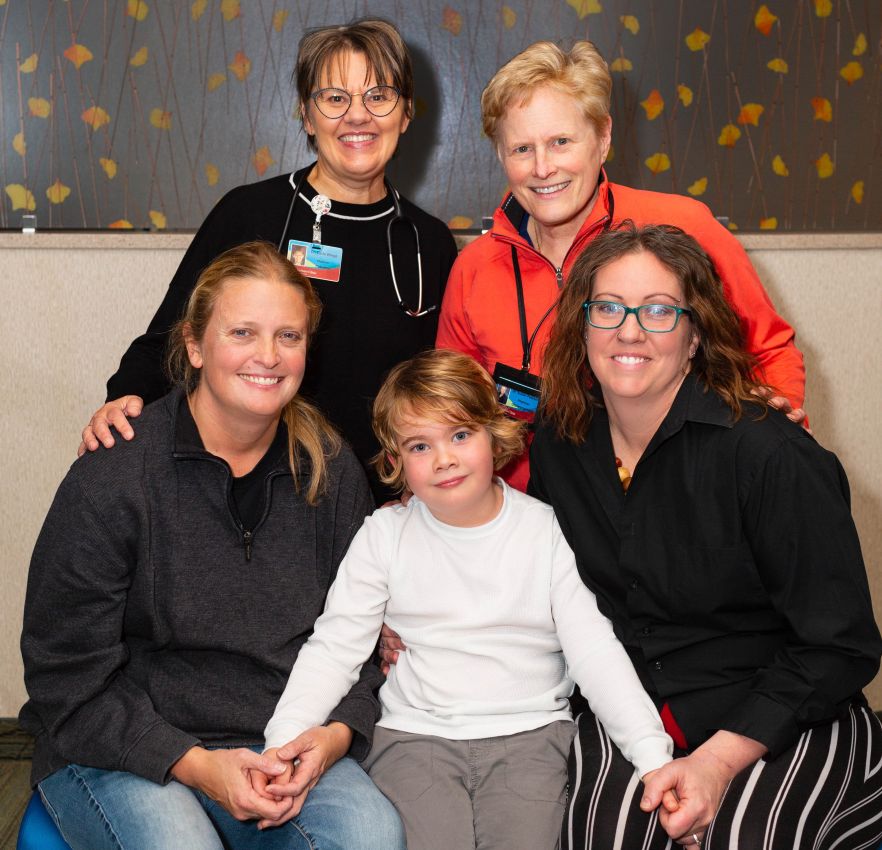
Dr. Darla Wrage and Dr. Susan Pearson work together to give Seger Turner and his parents, Kim Turner and Jena Faue a treatment plan for PANDAS.
Path to better health
Faced with Seger’s health concerns, Jena homeschools Seger to reduce exposure to strep. Kim, a forensic psychologist, works multiple jobs to keep up with medical and home improvement costs. Jena is a social worker who may resume her career in the future.
Dr. Wrage, Jena and Kim are hopeful that Seger will be able to return to school where he can learn and play with his peers.
“My son is thriving now. I do think he’ll continue to get better. Our hopes are high,” Jena said.
Expert advice
We are still learning about PANDAS and PANS which stands for Pediatric Acute-onset Neuropsychiatric Syndrome. PANS is thought to be an autoimmune response to various types of bacterial or viral infections, not just strep. Some research questions the condition itself.
It is difficult to diagnose, but there are treatments. We need to do much more research to definitively know how to treat it most effectively and understand why some children suffer from it. When there is a sudden behavior change, PANDAS and PANS are important to consider.
Dr. Susan Pearson is the only pediatric fellowship-trained ENT in southwest Minnesota. She completed a two-year pediatric ENT fellowship at George Washington University in Washington, D.C.
Dr. Darla Wrage offers this advice: For parents who have a child with a complex health issue, continue to be their advocate. Parents know their children best. Never hesitate to bring up questions, concerns, research or ideas with your child’s healthcare provider.